The ROC team is hosting talk by Ali Khalesi, Assistant Professor at Institut polytechnique des sciences avancées (IPSA), France. His talk will be followed by presentations from the new ROC members.
When: December 10, 2025 from 14h00 to 16h00
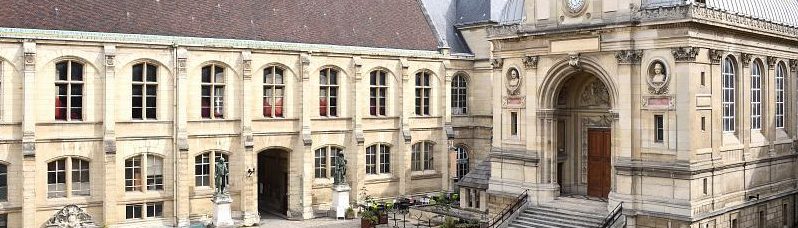
Where: Room “Boris Vian” Thesis Room (37.2.43) at CNAM, 2 rue Conté, 75003 Paris, France
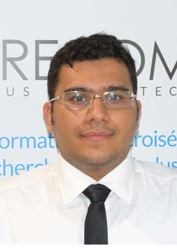
Speaker: Ali Khalesi — IPSA, France
Title: Multi-User Linearly-Decomposable Distributed Computing: Fundamental Limits and New Coded Architectures
Abstract: This talk presents the main results of my PhD thesis, defended in 2024 at Sorbonne University, devoted to the theoretical study of multi-user distributed computation for linearly-decomposable functions. In this framework, we construct a general model in which a matrix of computational demands can be factorized into two sparse matrices—a computation matrix and a communication matrix—revealing deep connections with several areas: coding theory, covering codes, syndrome decoding, compressed sensing, and fixed-support matrix factorization (tessellation).
We will discuss:
- fundamental lower and upper bounds on computation and communication costs;
- the characterization of a new class of codes, called partial covering codes;
- optimal architectures for perfect distributed computing;
- a new method called Tessellated Distributed Computing, offering optimal computation–communication trade-offs, both in the exact and approximate regimes.
These results lead to practical applications in large-scale distributed systems, distributed machine learning, and high-performance computing infrastructures.
Bio: Ali Khalesi is an Assistant Professor (Maître de conférences) at IPSA, Ivry-sur-Seine, and recipient of the 2nd Prize for the Best PhD Thesis—EDITE Paris 2025, as well as finalist for the 2025 Chancellerie de Paris Awards. He obtained his PhD in 2024 from Sorbonne University, within EURECOM, under the supervision of Prof. Petros Elia. His research focuses on the fundamental limits of distributed computing, information theory, coding theory, and the analysis of communication–computation trade-offs in modern distributed architectures.
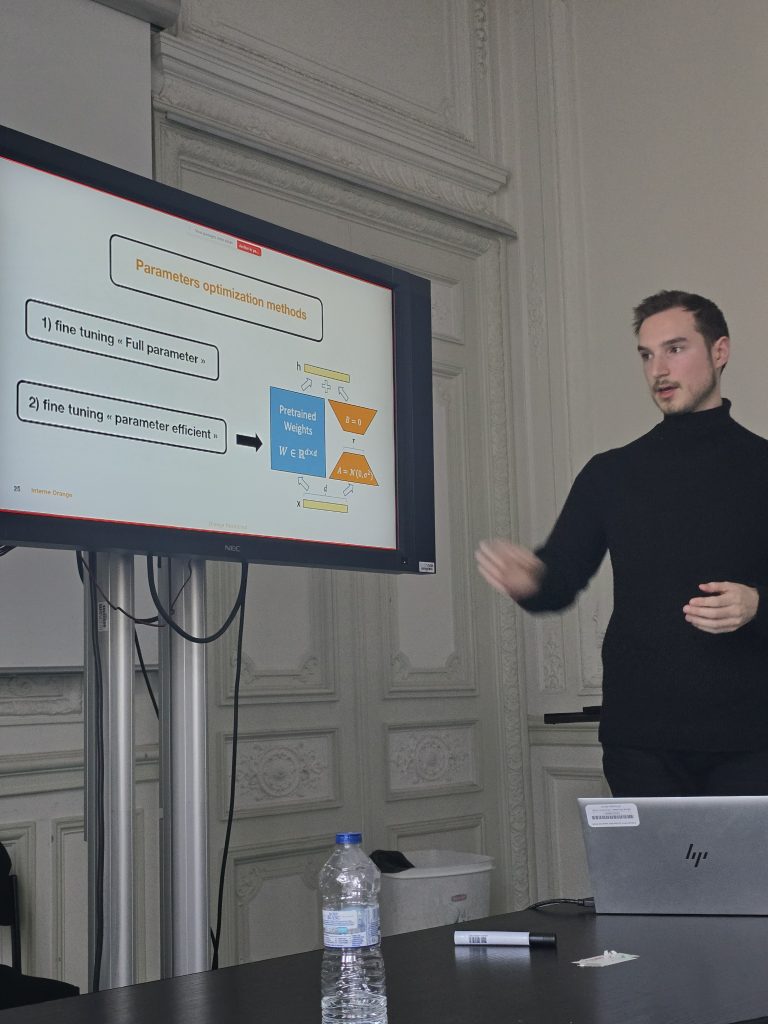
Speaker: Alexis Solar — Ph.D. Student, ROC Team & Orange

Title: Agentic AI Systems: From Theory to 6G Core Network Application and Research Perspectives
Abstract: The landscape of Artificial Intelligence is rapidly evolving from static content generation to autonomous action. This presentation explores the emergence of Agentic AI, marking a paradigm shift in how Large Language Models (LLMs) are utilized. We will begin with a brief review of Generative AI and LLM fundamentals, before diving into the architecture of LLM-based agents. Key topics will include their operational mechanisms, training methodologies, and current evolution. To illustrate these concepts, a concrete example of an agentic system developed during my Master’s internship will be presented as a proof of concept. Finally, we will discuss the research perspectives for my current thesis.
Bio: I am a first-year Ph.D. Student in a joint collaboration between Orange and CNAM (CEDRIC Lab, ROC Team). I recently graduated from Sorbonne University in Artificial Intelligence. My thesis work explores Generative AI, with a specific focus on Agentic AI and LLM-based agents applied to 6G Core Network.
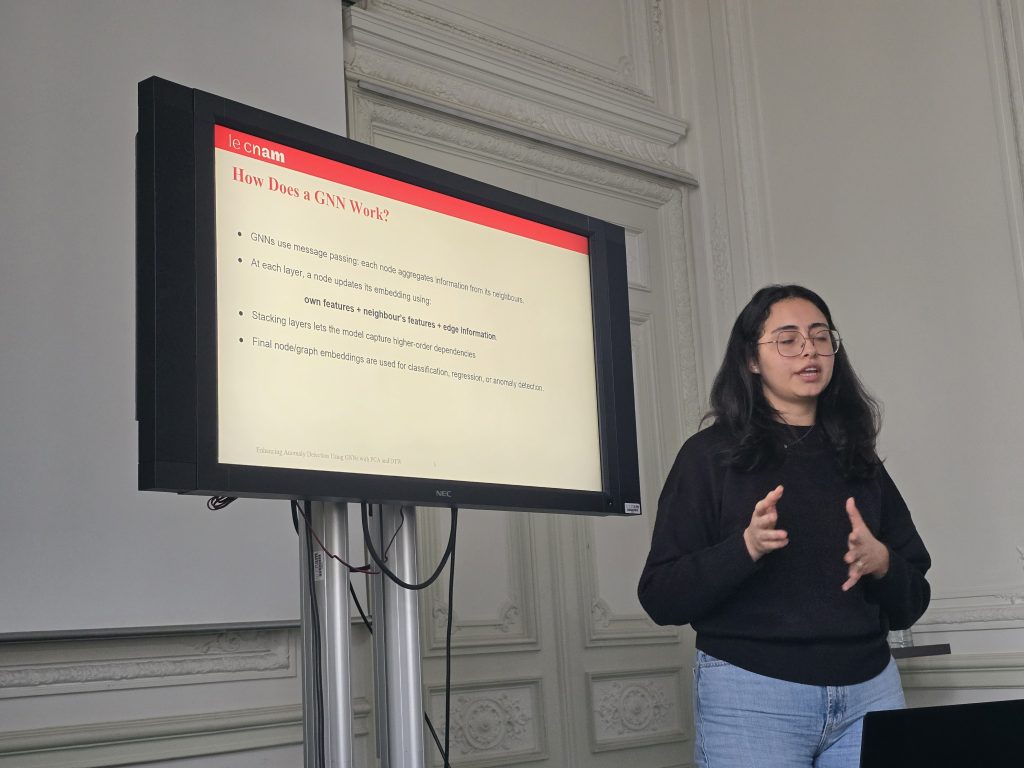
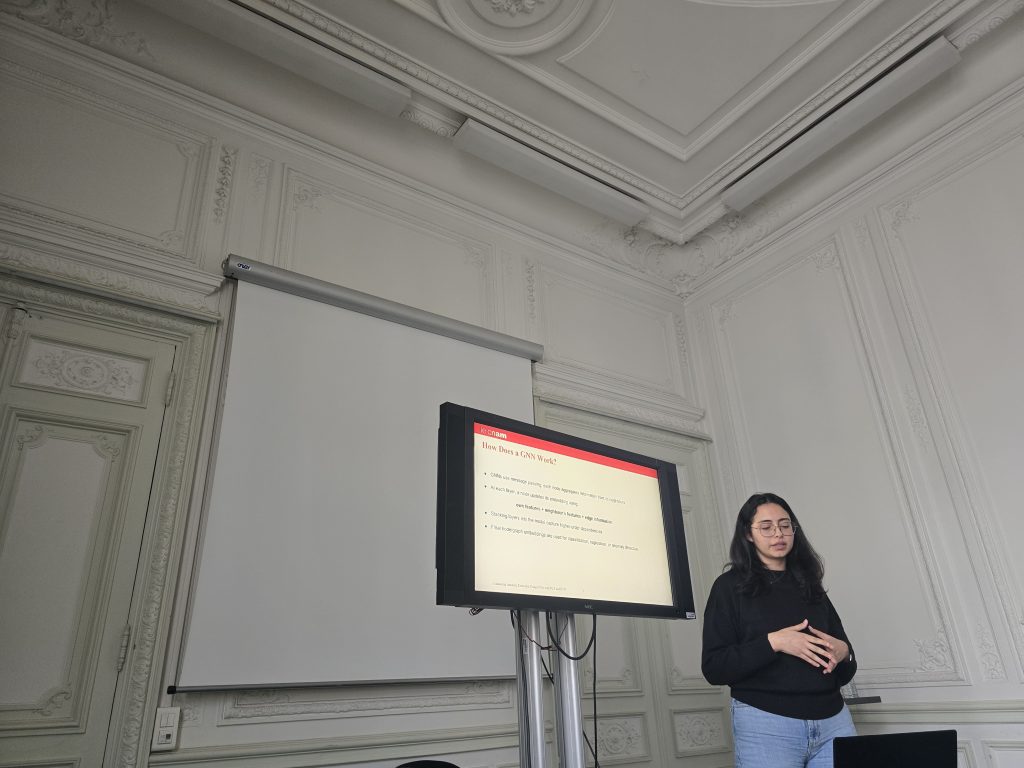
Speaker: Eya Zineddine — Intern, ROC Team, Cedric Lab

Title: Enhancing Anomaly Detection Using GNNs with PCA and DTW
Bio: Master’s student at the University of Cagliari (Italy), working on anomaly detection on networking datasets. My work focuses on graph neural networks (GNNs) combined with preprocessing techniques such as PCA and Dynamic Time Warping (DTW) and some NLP techniques to improve the robustness and accuracy of detection models.