
The ROC team is hosting talks by Prof. Hector Cruz Enriquez and Prof. Erik Ortiz Guerra from the Universidad Central “Marta Abreu” de Las Villas (UCLV), Cuba.
When: July 16, 2026 from 11h00 to 13h00
Where: Room 33.1.27C, 2 Rue Conté, 75003 Paris, France
Title : Physical-Layer Security in Wireless IoT Networks
The talk will begin with a brief overview of the Universidad Central “Marta Abreu” of La Villa (UCLV) in Cuba, specifically the Faculty of Electrical Engineering. The presentation will focus on security mechanisms in IoT networks, with an emphasis on physical layer security. Current research topics of the UCLV team will also be presented.
Speaker 1: Prof. Hector Cruz Enriquez, UCLV, Cuba
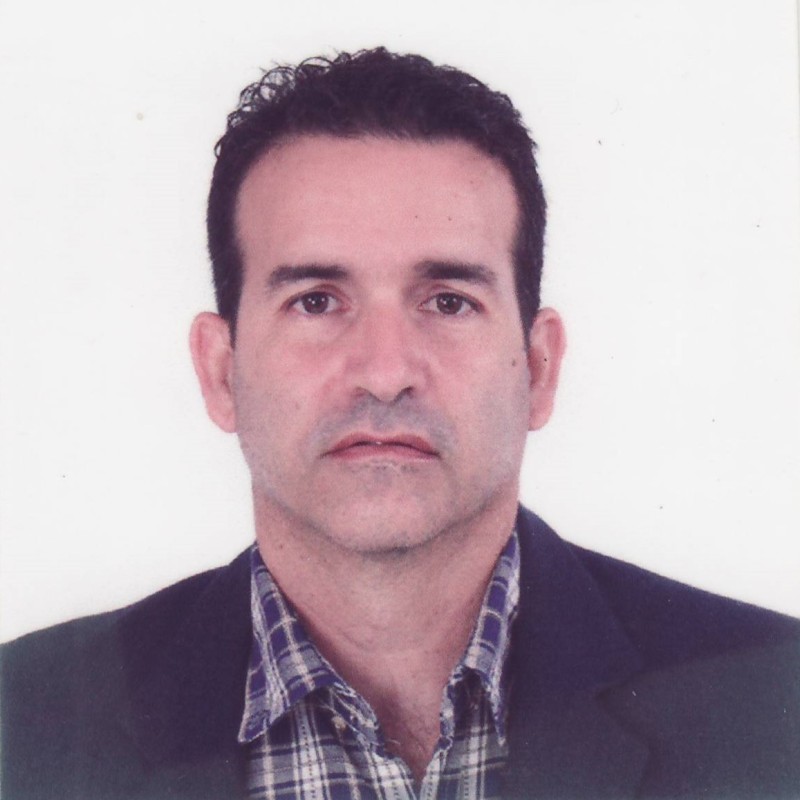
Bio: Hector Cruz Enriquez is an Associate Professor in Telecommunications and ICT Director at the Universidad Central “Marta Abreu” de Las Villas (UCLV), Cuba. He holds a Ph.D. in Telecommunications (2007), an M.Sc. in Telecommunications (2001), and an Engineering degree in Electronics and Telecommunications (1999), all from UCLV. Since 2001, he has served as an Associate Professor in the Department of Electronics and Telecommunications, and between 2005 and 2007, he was Head of the Telecommunication Department. Since 2007, he has directed the Central ICT Department at UCLV, leading institutional infrastructure and research-oriented ICT development. His academic responsibilities include graduate-level teaching in Communications and Networks, as well as in Local Networks and Intranet Environments, within master’s programs in Computer Science and Telematics.
His research expertise lies in Internet of Things (IoT), LPWAN technologies (including LoRa multi-hop systems), MAC and routing protocols, wireless security, and high-performance computing infrastructures. He has been actively involved in multiple international cooperation projects, including VLIR-UOS initiatives such as CuBeCloud (cloud computing for smart cities), Smart Water Management, ICT-NETWORK, and HPC-Cuba, as well as the Cuba–Germany CooL-IoT project. He has also coordinated Cuba’s participation in the RICAP Ibero-American supercomputing network and promoted the development of national HPC infrastructure. His recognition includes a Visiting Researcher position at Vrije Universiteit Brussel (2022–2023), a Cuban Ministry of Higher Education award for HPC innovation (2021), and institutional recognition for economic impact (2020). His publication record includes contributions to IEEE venues, Sensors, Future Internet, and international book chapters focused on IoT systems, wireless security, TSCH networks, and distributed computing infrastructures.
Speaker 2: Prof. Erik Ortiz Guerra, UCLV, Cuba
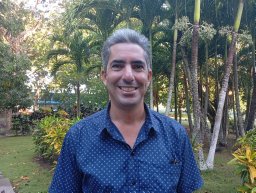
Bio: Erik Ortiz Guerra is an Associate Professor in Telecommunications at the Universidad Central “Marta Abreu” de Las Villas (UCLV), Cuba, within the Department of Electronics and Telecommunications of the Electrical Engineering Faculty. He holds a Ph.D. in Telecommunications (2015) and an M.Sc. in Telematics (2011) from UCLV, and is a Telecommunication and Electronic Engineer (2008). He also completed advanced postgraduate training and Ph.D. research at the Federal Technological University of Paraná (Brazil), specializing in wireless and cooperative communications. His academic work includes both research and teaching in telecommunications engineering, with a strong focus on modern wireless systems and networked communication technologies.
His research interests include IoT systems, cognitive radio networks, MAC protocol design, dynamic spectrum allocation, LoRa and TSCH-based networks, and machine learning applications for wireless security and intrusion detection. He has coordinated and contributed to several international research collaborations, including VLIR-UOS projects such as CuBeCloud and Smart Water Management, the DAAD CooL-IoT project with Germany, the PHC DIRAC collaboration with Sorbonne University, and Cuba–Brazil CAPES-MES initiatives. He has served as the Cuban coordinator in several of these projects. His scientific contributions include publications in IEEE journals and conferences, Computer Communications, Sensors, Future Internet, and Springer proceedings, covering topics such as cognitive radio rendezvous schemes, MAC protocol performance, TSCH modeling, LoRa synchronization, and engineering education methodologies. His distinctions include being named Young Associate of the Cuban Academy of Sciences (2024–2029), receiving the Cuban Education Distinction (2024), and multiple awards for research impact and doctoral excellence, including recognition for best thesis and best paper in IEEE venues.